


Chichester A&E Team Building Case Study: 25 Teams, 9 Treasure Hunts and a Year of Engagement
Posted on: 17/11/2026Running a team-building activity is relatively straightforward when everyone can leave work at the same time.
For hospitals, emergency services and other organisations operating around the clock, things are rarely that simple.
When Chichester's Accident & Emergency Department wanted to provide staff with a fun, engaging team building experience, there was one significant challenge: patient care could not be interrupted. Staff could not all be released at once, and departmental cover had to be maintained at all times.
Rather than seeing this as a barrier, the department embraced a different approach.
Over the course of a year, Black Cat Treasure Hunts delivered nine separate treasure hunt events involving 25 competing teams. What began as a practical solution to an operational challenge evolved into a sustained staff engagement programme that generated anticipation, conversation, friendly competition and a wealth of shared memories across the department.
This case study demonstrates how team building activities can be successfully adapted for hospitals, NHS departments and other organisations where shift patterns make traditional event formats difficult.The Challenge: Team Building in a Busy A&E Department
Hospital team building presents unique logistical challenges.
Unlike many businesses, Accident & Emergency departments cannot close for the afternoon, delay service or release entire teams simultaneously. Staffing levels must remain appropriate, patient needs remain the priority and operational demands can change at a moment's notice.
The objective was simple: create a team building experience that allowed staff to enjoy time together away from their normal working environment without affecting departmental operations.
The solution was to divide participation across multiple dates.
Instead of organising one large event, staff took part across nine treasure hunt sessions spread throughout the year.
Why a Staggered Approach Worked
At first glance, splitting a team building activity into multiple events may appear less impactful than gathering everybody together.
In reality, the opposite proved true.
Each of the nine treasure hunts created its own excitement and sense of occasion. Staff who had already participated shared their enthusiasm while future participants looked forward to their own opportunity.
Importantly, teams were encouraged not to reveal their scores or disclose the precise nature of the treasure hunt challenges. This maintained fairness while preserving the sense of discovery for later participants.
As the programme progressed, anticipation steadily increased.
Rather than experiencing a single event followed by a gradual decline in interest, the department enjoyed repeated moments of engagement throughout the year.
25 Teams, One Shared Experience
Across the nine dates, a total of 25 teams participated.
Some events saw two teams competing head to head. Most involved three teams, while one event featured four teams taking on the challenge at the same time.
Although participants completed the treasure hunt on different dates, every team became part of the same wider programme.
The consistent structure enabled all teams to enjoy a comparable experience while creating a sense of belonging to a department wide challenge.
Participants knew they were contributing to something larger than a single day out.
Team Building Through Problem Solving and Collaboration
One reason treasure hunts work particularly well as team building activities is that they naturally encourage communication.
Teams must share ideas, interpret information, solve clues and make decisions together.
Unlike some traditional corporate team building exercises, treasure hunts allow different personalities and skill sets to contribute in different ways.
Some participants excel at navigation. Others enjoy problem solving. Some spot details that others miss. Some emerge as organisers and communicators.
The format creates opportunities for collaboration without forcing participants into artificial situations.
For healthcare teams who spend much of their working lives dealing with high pressure situations, the chance to work together in a fun, informal environment can be particularly valuable.
 How Social Media Extended Engagement
An unexpected benefit of the programme came from social media.
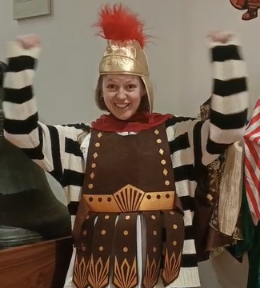
Following the treasure hunts, photos and memories were shared via Instagram and Facebook, helping to keep the project visible throughout the year.
These posts did more than simply record what had happened.
They gave previous participants an opportunity to relive the experience, while creating excitement amongst those still waiting for their own event.
Each post generated fresh discussion within the department and contributed to the growing sense that everyone was participating in a larger shared journey.
As part of the final project review, social media engagement is being analysed alongside team results to identify which content generated the most interest among participants. A team of 4 people have over 1000 individual viewers on Instagram and lead!
The Importance of Shared Memories
Many team-building activities are enjoyable on the day but quickly fade into the background afterwards.
One of the most rewarding aspects of this project has been seeing memories build over time.
Every treasure hunt added new photographs, stories and moments of achievement.
Every participating team contributed another chapter to the programme.
To celebrate the completion of all nine events, the department's coordinator is bringing together memories from throughout the year into a single montage that will be shared with staff across the department.
This final piece will provide an opportunity for all participants to reflect on the collective experience and celebrate what has become a unique chapter in the department's story.
Lessons for Large Organisations
The Chichester A&E programme highlights an important lesson for organisations that operate shifts or provide essential services.
Successful team building does not necessarily require everyone to attend at the same time.
In many cases, spreading participation across multiple dates can produce additional benefits:
- Greater flexibility around staffing requirements.
- Increased participation opportunities.
- Extended engagement over a longer period.
- Repeated anticipation and excitement.
- Stronger accumulation of shared memories.
- Ongoing discussion between events.
- Better integration with normal operational demands.
For hospitals, emergency services, local authorities, manufacturing businesses and customer service operations, a staggered approach can often be more practical and more impactful than a traditional one day event.
Conclusion
The completion of nine treasure hunts involving 25 teams demonstrates how creative planning can overcome operational challenges.
What began as a necessity for an Accident & Emergency department became a year-long programme of team building, staff engagement and shared experiences.
By adapting the format to meet the realities of a busy NHS environment, Chichester A&E successfully combined operational resilience with meaningful staff engagement.
For organisations looking for a flexible team building solution that works around shift patterns and essential services, this case study shows that sometimes the most effective approach is not bringing everyone together at once.
Sometimes it is creating a story that unfolds throughout the year.
Could this work for your organisation?
Not every organisation can release its staff at the same time. Hospitals, local authorities, emergency services, manufacturing businesses and customer service teams often face similar challenges.Black Cat Treasure Hunts can design flexible team building experiences that fit around operational requirements while creating lasting engagement and memorable shared experiences.
Contact me (Tim) on info@blackcattreasurehunts.co.uk or call (01323) 655346 to discuss a tailored treasure hunt for your organisation.
Related article:
6 unusual reasons to have a team building treasure hunt with Black Cat Treasure Hunts


©2026 Black Cat Treasure Hunts
Website design by Modern Websites